
The Fastest Six Seconds in Sports
You can watch sumo on a screen a hundred times and still be unprepared for the real thing. Two enormous athletes settle into a crouch, lock eyes, and then launch into each other with a slap of flesh you feel in your ribs from twenty rows back. The crowd erupts, and then it is finished. Most bouts last only a few seconds. What surrounds those seconds, though, is a thousand years of ceremony, and that combination of explosive power and quiet ritual is why a live sumo tournament ends up being the highlight of so many trips to Japan. Here is what you need to know before you go.
More Than a Sport
Sumo is Japan’s national sport, with roots reaching back more than a thousand years to rituals performed at Shinto shrines to pray for a good harvest. That religious heritage never went away, and it explains almost everything that looks unusual to a newcomer. The ring is treated as sacred ground. The salt, the stomping, and the referee’s ornate robes are not showmanship but survivals of ceremony. Modern sumo is a professional sport with rankings, rivalries, and champions, yet it is still performed as something closer to a rite. Understanding that turns a confusing spectacle into a fascinating one.
When and Where Tournaments Happen
This is the part that catches travelers out. Professional sumo is not played year round like baseball. There are only six official grand tournaments each year, each running fifteen straight days, and they rotate between four cities.
- Tokyo hosts three of them, in January, May, and September, at the famous sumo hall in the Ryogoku district.
- Nagoya hosts the July tournament.
- Osaka takes March and Fukuoka takes November.
Because the calendar is so narrow, seeing live sumo depends entirely on your travel dates lining up with a tournament. Our Live Sumo Tournament experience covers the Tokyo tournaments and the Nagoya tournament, which is why it is listed as a seasonal tour.
How a Bout Is Won
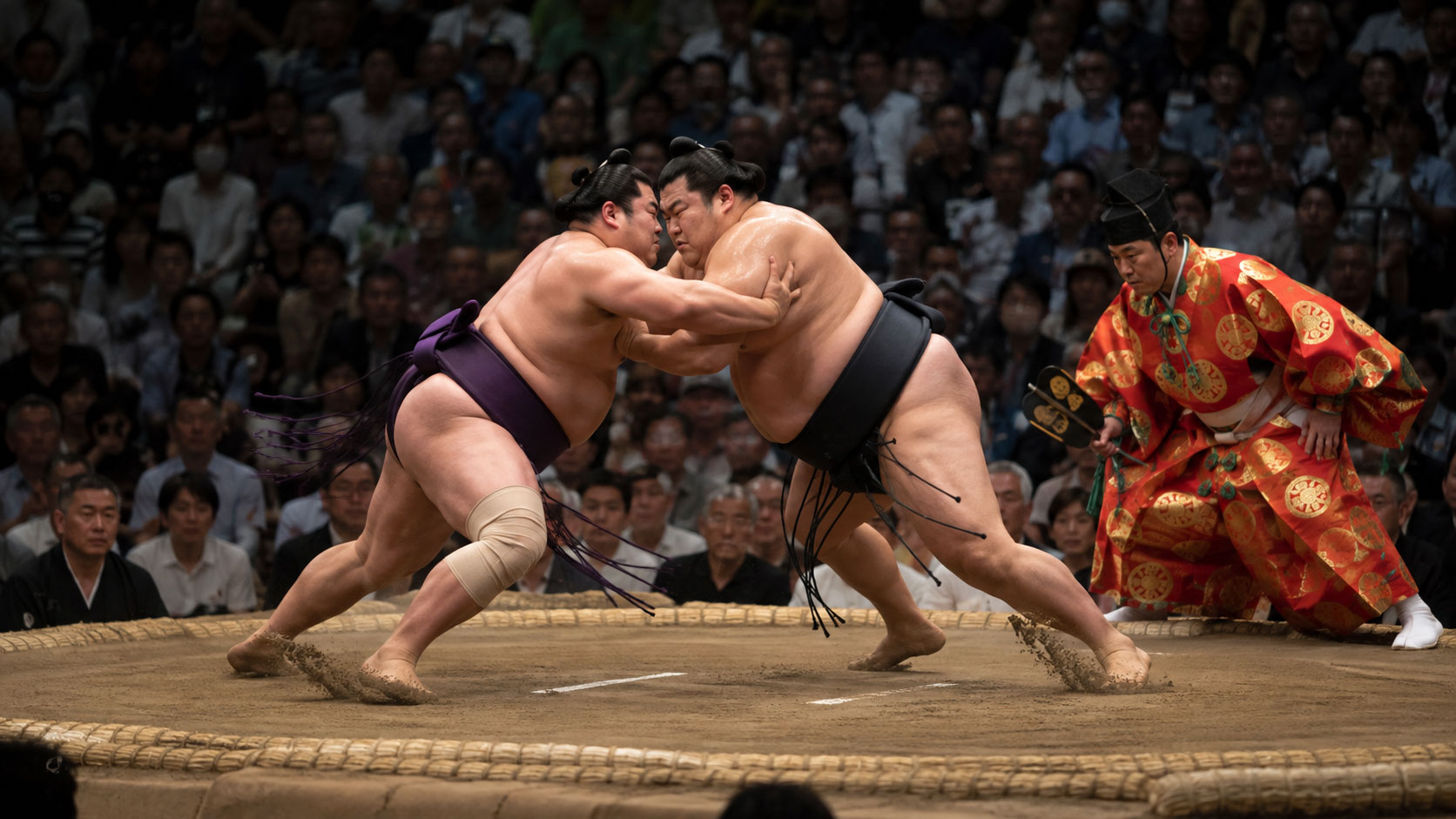
The rules are beautifully simple, which is part of the appeal. Two wrestlers face off inside a raised clay ring, and there are only two ways to lose: step outside the straw boundary, or touch the ground with any part of your body other than the soles of your feet. There are no weight classes and no rounds. That is the whole contest. Within those limits, wrestlers use more than eighty officially recognized winning techniques, from thunderous pushes to slick throws and sidesteps, and a smaller athlete with better balance really can topple a much heavier one.
The Rituals You Will Notice
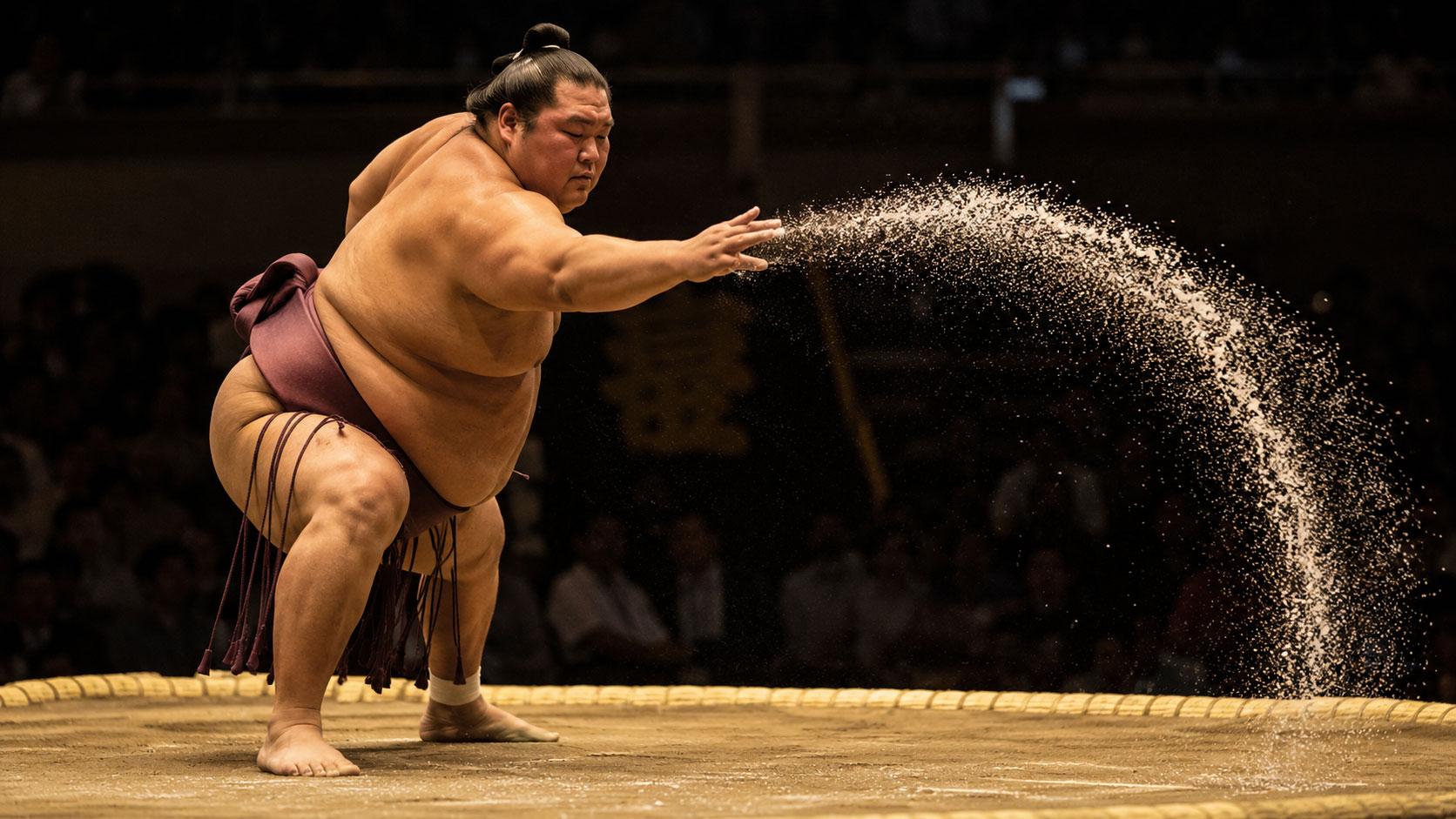
Once you know what to watch for, the routine before each bout becomes as interesting as the fight. Wrestlers fling handfuls of salt across the clay to purify the ring. They lift their legs high and stomp down hard, a gesture meant to drive out bad spirits. They squat, glare at each other, rise, and reset, sometimes several times, which is both a mental battle and a tradition. Presiding over it all is the referee in brilliant silk robes, holding a wooden fan and calling the action in a sharp, singing voice. Nobody starts the bout on a whistle. It begins the instant both wrestlers touch their fists down and decide, together, that the moment has come.
What a Full Day Feels Like
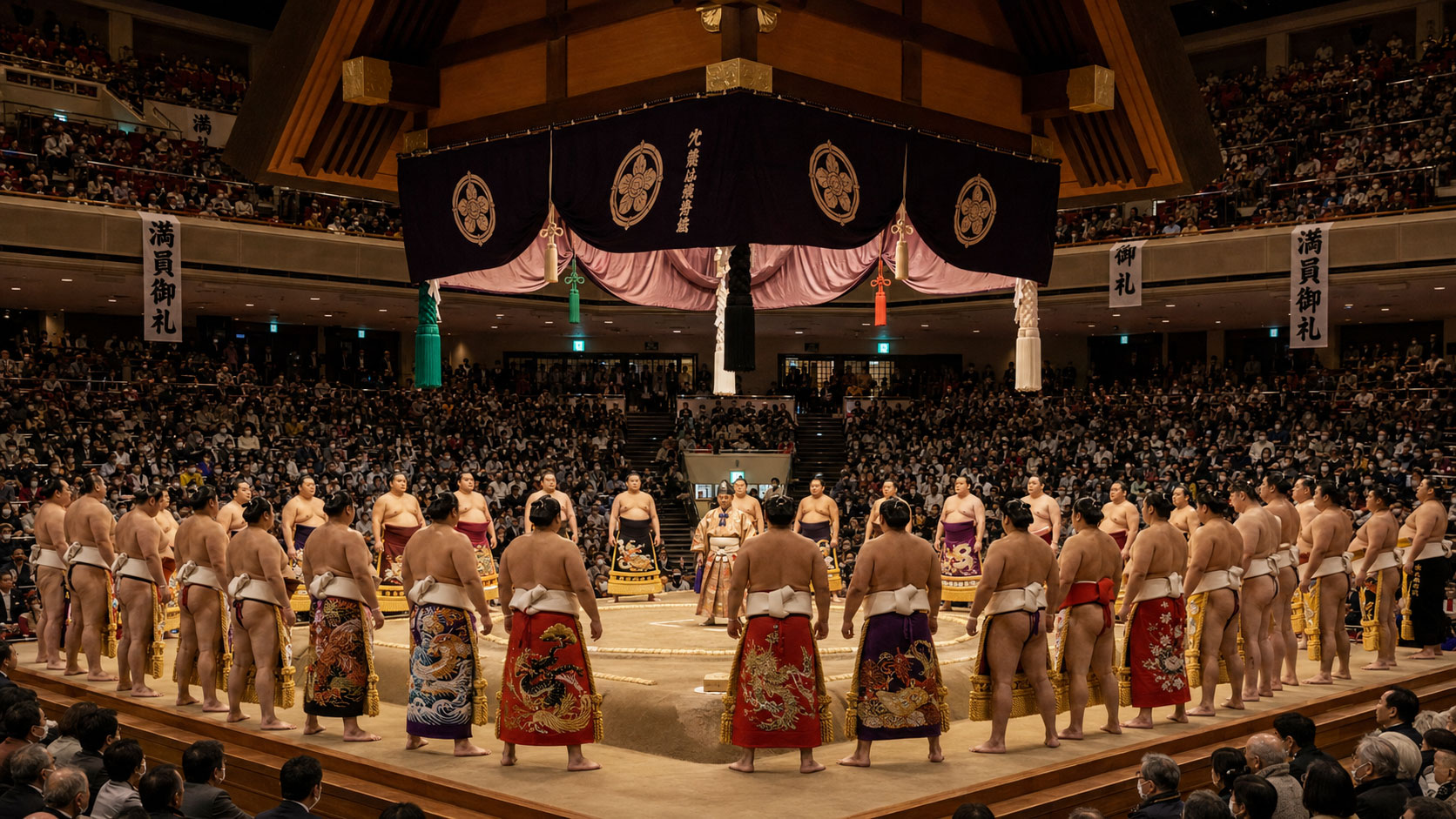
A tournament day is much longer than most visitors expect, and it builds beautifully. The lowest ranked wrestlers compete in a nearly empty arena in the morning, which is a wonderful time to sit close and watch raw, hungry young athletes. The building fills through the afternoon. Before the top division fights, those wrestlers circle the ring in embroidered ceremonial aprons in a ring entering ceremony that is pure pageantry. The final bouts of the day, featuring the highest ranked wrestlers, land in the late afternoon with the whole hall roaring, and the day closes with a ceremonial bow twirling routine. You do not have to stay for all of it, but arriving early and leaving late gives you the whole arc.
Seats, Snacks, and Simple Manners
Seating comes in two main styles, and each has its charms. Traditional box seats sit low and close, where you kneel or sit on cushions on the floor, while raised balcony seating gives you ordinary chairs and a wider view of the ring. A few practical notes make the day smoother.
- The closest ringside spots have no barrier, so wrestlers really can tumble into the front rows.
- Food and drink are part of the culture here, and arenas sell everything from bento boxes to grilled snacks.
- Look for chanko nabe, the hearty hot pot stew wrestlers eat to build strength, which is a local specialty around the Ryogoku sumo district.
- Keep the aisles clear, stay in your seat during a bout, and follow the crowd’s lead on when to cheer.
Why It Is Better With a Guide
Sumo is welcoming, but it is not self-explanatory. Tickets for popular days sell out quickly, the ranking system is genuinely confusing, and the ceremonies pass without any English explanation in the hall. Having someone beside you who can tell you why that wrestler just got a fistful of extra salt, or which two rivals in the next bout have history, changes the entire experience. Our Live Sumo Tournament tour gets you in with an English-speaking guide who walks you through it from the first bout to the last, so nothing goes over your head.
Feel the Floor Shake
Live sumo is loud, strange, elegant, and over in a blink, and there is nothing else like it anywhere in the world. If your trip lines up with a tournament in Tokyo or Nagoya, take it as a gift and go. You will leave understanding a piece of Japanese culture that no museum can teach you, with the sound of that first collision still ringing in your ears. When you are ready to check the tournament calendar against your dates, we are happy to help you plan it.