
Japan’s Serene Giant
Some sights are impressive in photos, and some stop you in your tracks in person. The Great Buddha of Kamakura is firmly in the second group. Sitting peacefully in the open air, this enormous bronze figure has watched over the same spot for nearly 800 years, through storms, wars, and centuries of change. It is one of Japan’s most beloved treasures and a highlight of our full-day tour from Tokyo. Here is what makes it so special.
What Is the Great Buddha?
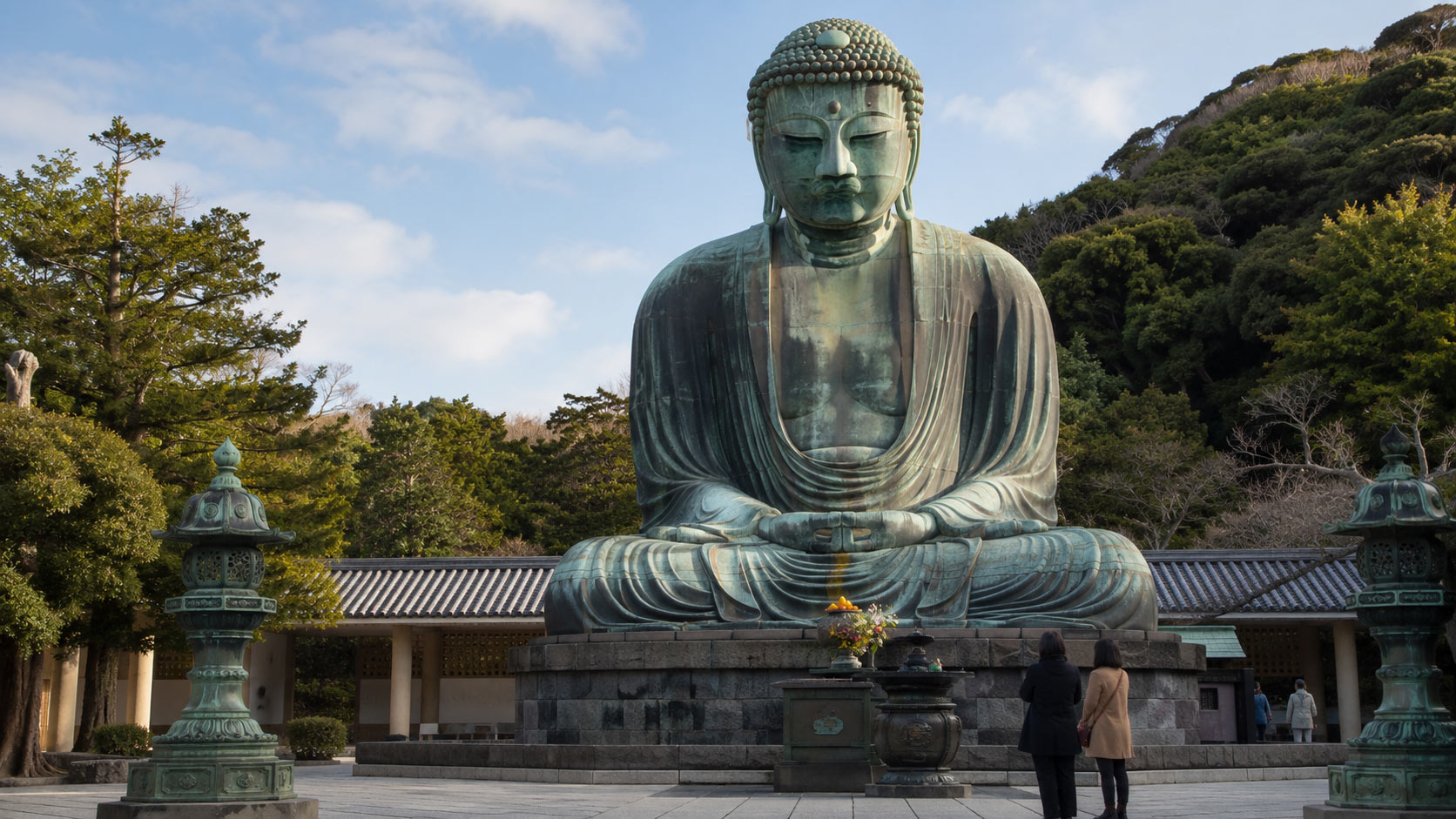
Known in Japanese as the Daibutsu, the Great Buddha is a monumental bronze statue of Amida Buddha, seated in quiet meditation at the temple of Kotoku-in. It stands more than 13 meters tall including its base and weighs roughly 121 tons. Photos rarely capture the scale. Standing at its feet and looking up at that calm, downcast face is a genuinely moving experience, and it is easy to see why the statue is designated a National Treasure of Japan.
A Statue With a Story
The Great Buddha was completed in 1252, replacing an earlier wooden Buddha that had stood on the site. Originally it did not sit outdoors at all. It was housed inside a vast wooden hall built to shelter it. Over the following centuries, storms and a tsunami destroyed that hall, and eventually the temple simply stopped rebuilding it. Since then, the Buddha has sat beneath the open sky, exposed to the seasons. Look around the courtyard and you can still spot the stone bases where the hall’s massive pillars once stood, a quiet reminder of what nature took away and what endured.
Step Inside the Buddha
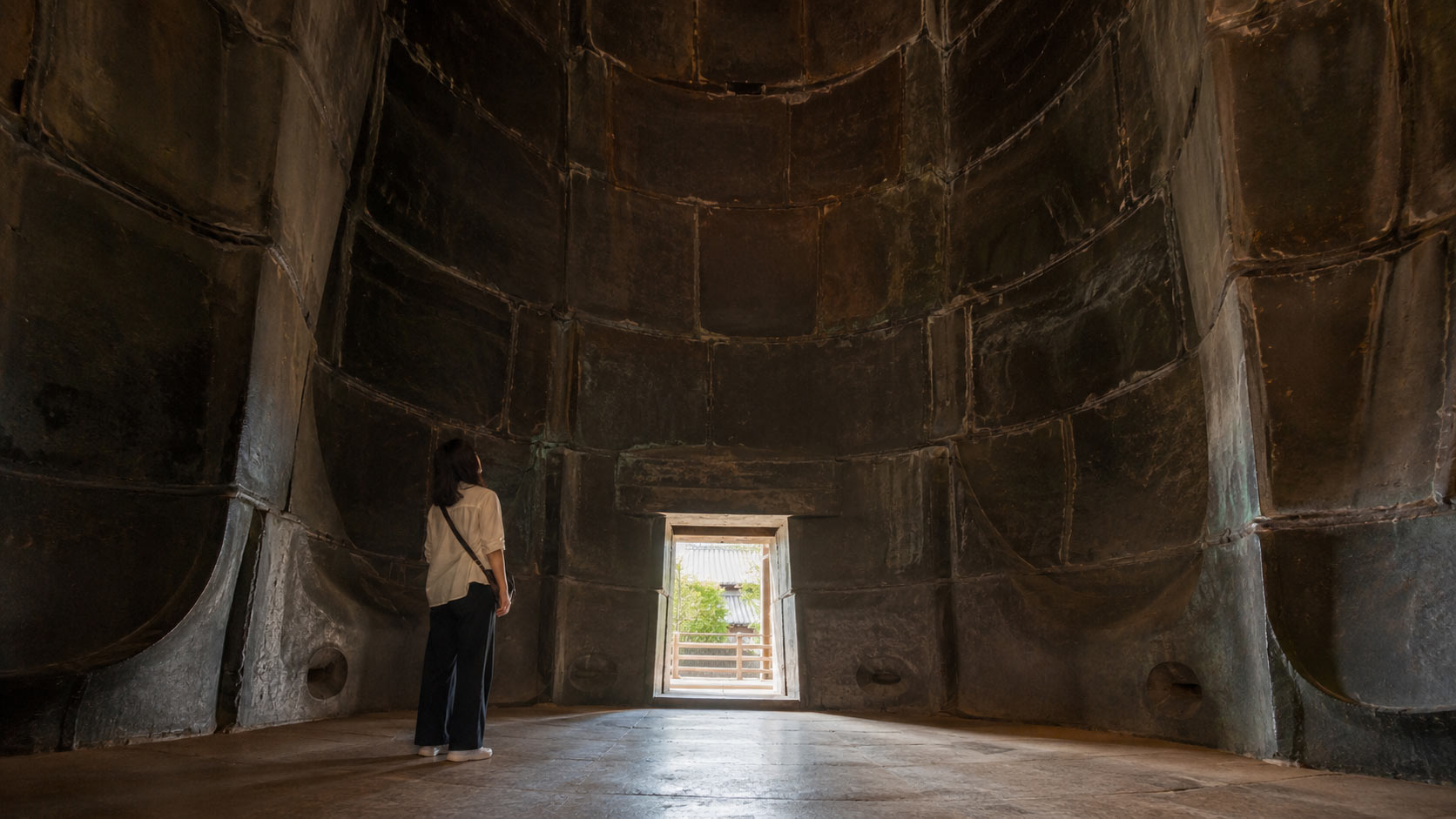
Here is a detail many visitors miss: the Great Buddha is hollow, and for a small fee you can actually step inside it. Entering through a doorway at the base, you can see the bronze from within and study the seams where the sections were joined together centuries ago. It is a fascinating look at how medieval Japanese artisans cast something so enormous, and it is a rare chance to stand inside a national treasure.
Kamakura: Japan’s Old Samurai Capital
The Buddha’s setting is part of the story. Today Kamakura is a relaxed seaside town of temples, shrines, and forested hills, but it was once the political heart of the entire country. During the Kamakura period, this was the seat of the shogunate and the center of samurai power in Japan. The Great Buddha was created during that era of influence, which is exactly why a statue of such ambition rose in this seemingly quiet coastal town.
Visiting the Great Buddha
A visit is easy and rewarding, and a little courtesy goes a long way at an active place of worship. Keep a few things in mind.
- Approach quietly and respectfully, as this is a working temple.
- Give yourself time to walk all the way around the statue, not just view it head on.
- Look for the stone pillar bases from the vanished hall.
- Bring a little cash if you would like to step inside.
The grounds are compact and easy to enjoy, which makes the Buddha a natural pairing with the other great sights of the region.
Stand Before the Daibutsu
Nearly eight centuries of history sit in that calm bronze face, weathered by open sky since the hall around it washed away. Our full-day Mount Fuji, Kamakura, Lake Ashi and Big Buddha tour brings you here alongside the Lake Ashi cruise and the best Mount Fuji viewpoints, with an English-speaking guide sharing the stories behind each stop. Come stand at the Buddha’s feet, look up, and let the quiet of the place do the rest.